
.png?width=260&height=54&name=Layer_1%20(1).png "Syncron")
How the Circular Economy Is Unleashing New Sources of Business Value for OEMs
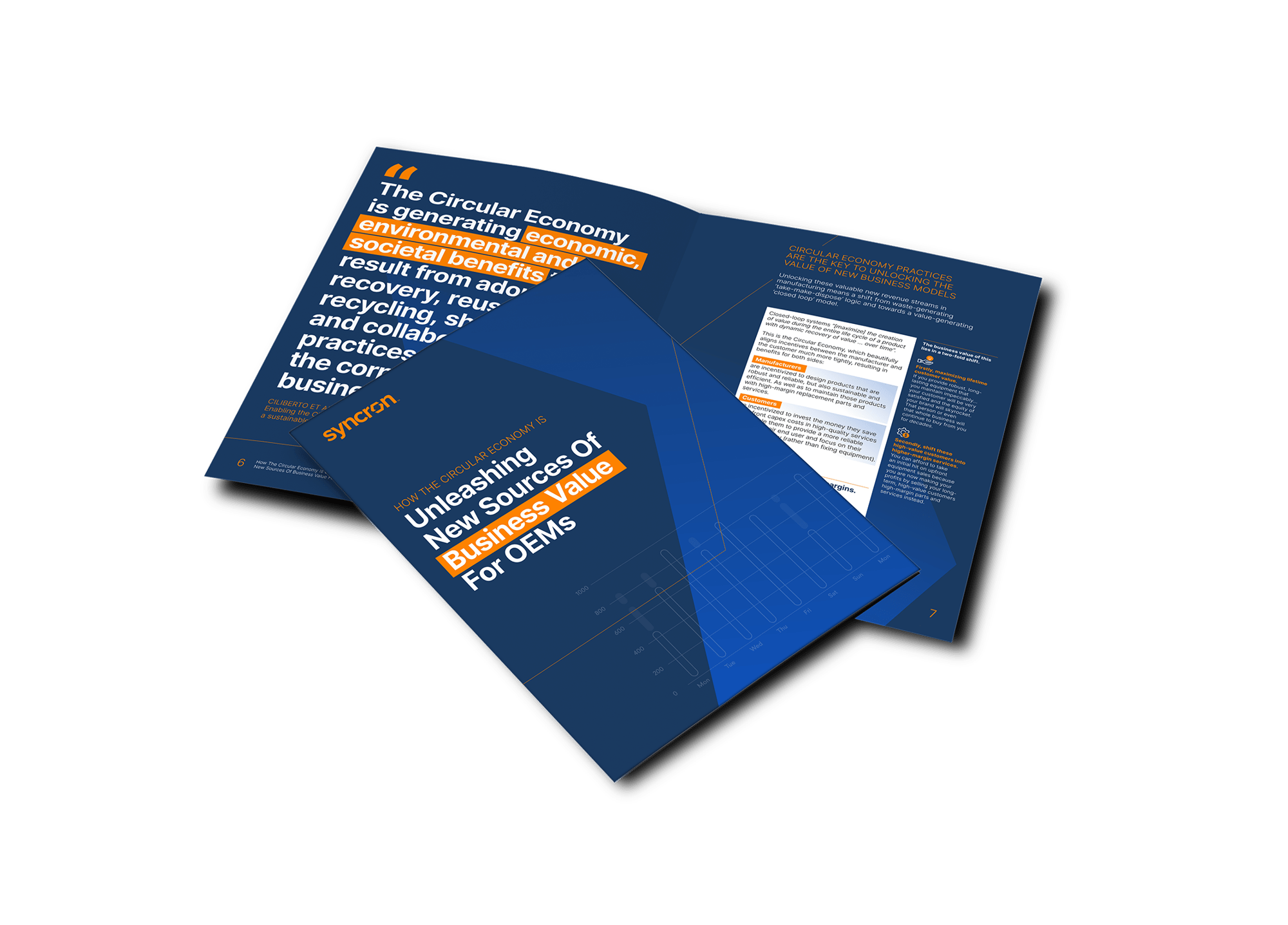
This eBook outlines
Along with real-life use cases from companies like Toyota, IKEA, and Caterpillar

Economic and environmental benefits
The circular economy drives innovation and sustainable growth by reducing carbon emissions and improving parts longevity and reuse.

Service-based business models
OEMs are shifting to service-based models, like Caterpillar’s Cat Reman® program and IKEA’s furniture leasing, offering higher ROI and margins.

Digitization and data analytics
Embedding automated, data-driven processes throughout the product lifecycle unlocks efficiencies and new revenue streams.

Shifts in profitability
Profitability is moving from equipment sales to the use phase, supported by trends in digitization, servitization, and sustainability.

High complexity, high risk, high reward
New service-based models involve higher complexity and risk, requiring advanced skills to manage predictions and logistics efficiently.

Real-world examples
Companies like Airbus and Johnson & Johnson use data ecosystems and digital analytics to optimize productivity and predict demand, achieving significant economic benefits.